
Base wax (grip) – the foundation of the grip zone
Base wax for grip provides durable traction and makes your wax last longer. Read more further down the page.

Original price
119 kr
-
Original price
119 kr
Original price
119 kr
119 kr
119 kr
-
119 kr
Current price
119 kr
Swix VG30 Base Wax Blue +1 / -20
Base wax that prevents the grip wax on the skis from wearing out so quickly. Swix VG30 Base Wax Blue is used as a base for all can waxes on new sn...
View full details
Original price
119 kr
-
Original price
119 kr
Original price
119 kr
119 kr
119 kr
-
119 kr
Current price
119 kr


Original price
119 kr
-
Original price
119 kr
Original price
119 kr
119 kr
119 kr
-
119 kr
Current price
119 kr
Skigo XC Base Wax
Skigo XC Base Wax – A necessary foundation for the best performance! Skigo XC Base Wax is the optimal base for your grip zone, created to provide m...
View full details
Original price
119 kr
-
Original price
119 kr
Original price
119 kr
119 kr
119 kr
-
119 kr
Current price
119 kr

Original price
119 kr
-
Original price
119 kr
Original price
119 kr
119 kr
119 kr
-
119 kr
Current price
119 kr
Swix VG35 Base Wax Green -1 / -22
Base wax that prevents the grip wax on skis from wearing out so quickly. Swix VG35 Base Binder Green is a base wax for transformed snow and more ab...
View full details
Original price
119 kr
-
Original price
119 kr
Original price
119 kr
119 kr
119 kr
-
119 kr
Current price
119 kr

Original price
249 kr
-
Original price
249 kr
Original price
249 kr
249 kr
249 kr
-
249 kr
Current price
249 kr
Skigo Base Wax X-Strong
Skigo XC Base Wax X-Strong – A necessary foundation for the best performance! The Swedish national team's favorite for many years. Has an enormous...
View full details
Original price
249 kr
-
Original price
249 kr
Original price
249 kr
249 kr
249 kr
-
249 kr
Current price
249 kr

Original price
129 kr
-
Original price
129 kr
Original price
129 kr
129 kr
129 kr
-
129 kr
Current price
129 kr
Start Base Fertilizer standard
The base waxes give the waxing improved durability. Start by roughening the ski's surface. Sandpaper with a grit of 100 is recommended. Then apply...
View full details
Original price
129 kr
-
Original price
129 kr
Original price
129 kr
129 kr
129 kr
-
129 kr
Current price
129 kr
Original price
129 kr
-
Original price
129 kr
Original price
129 kr
129 kr
129 kr
-
129 kr
Current price
129 kr
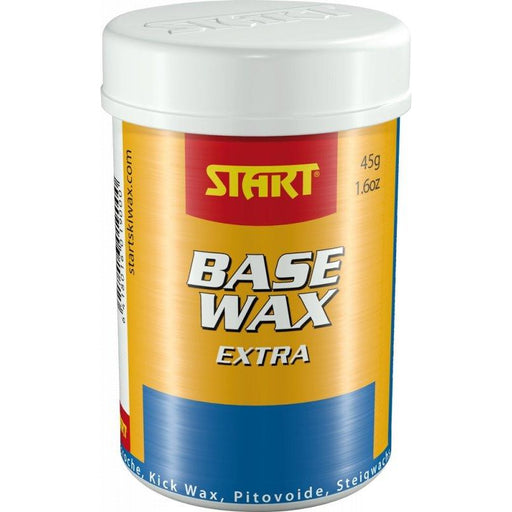
Start Base Coat Extra
The base waxes enhance the durability of the waxing. Start by roughening the ski's surface. Sandpaper with a grit of 100 is recommended. Then appl...
View full details
Original price
129 kr
-
Original price
129 kr
Original price
129 kr
129 kr
129 kr
-
129 kr
Current price
129 kr
How base wax for grip works
In short: Base wax gives hard wax or klister something to cling to. A thin, even surface that is carefully heated makes the grip last longer – especially in abrasive, coarse-grained or icier snow.
When do you use base wax?
-
When the grip wax wears off too quickly (rough/coarse-grained snow, icy conditions).
-
Before long sessions, competitions or weather that shifts between sub-zero and around zero degrees.
-
In klister conditions – as base klister under your klister for better durability.
Choose the right type
-
Base wax (can) – for classic grip zone under hard wax in colder to mild conditions.
-
Base klister (klister/spray) – under klister in zero to warm and coarse-grained conditions.
-
Form: solid for fine control; spray/klister for super-thin layers and quick application.
How to do it – step by step
-
Clean & lightly roughen the grip zone (fine sandpaper).
-
Apply a thin layer of base wax/base klister in the grip zone.
-
Heat very carefully (short, even strokes) and smooth/cork to a smooth surface.
-
Let cool.
-
Apply your hard wax/klister on top in thin layers and cork evenly between layers.
Common mistakes (and quick fixes)
-
Too thick a layer of base – → make it thinner, heat/cork smooth.
-
Uneven surface → lightly roughen and redo the final heating.
-
Icing near 0 °C → thinner layer and correct overlying wax (possibly mixed with klister).
-
Wear in coarse-grained → choose base klister as a base and increase the number of thin layers on top.
Quick buying advice
-
Cold (-12 to -6 °C): harder can waxes + thin base wax.
-
Around zero (-1 to +2 °C): base klister under klister.
-
Warm (0 to +10 °C): klister conditions – base klister helps durability.
FAQ (short)
Do I always need base wax?
No – but it clearly extends durability in abrasive snow and in klister conditions.
How thin should it be?
Thin enough for the structure in the base to show – better two thin layers than one thick.
Do I have to heat it in?
It becomes more even and holds better. Heat briefly and carefully, and cork smoothly.
When do I choose base klister instead of base wax?
When it is coarse-grained, around 0 °C or warmer – and you are going to use klister anyway.