

Two facesThe base edge and side edge serve different purposes.
Vallaboden - an in-depth guide to edge tuning
Sharpen steel edges
What is the best way to sharpen steel edges on skis? Here you get a complete guide to base bevel, side edge angle, files, diamond stones, and the workflow for alpine skis and snowboards.

Vallaboden's main ruleMaintain mostly with a diamond stone. Use a file when the edge is damaged, rounded, or when the angle needs to be restored.
The right angleRetain the known original angle where possible.
Use a stone regularlyA diamond stone handles routine maintenance.
File sparinglyUse a file when material actually needs removing.
Complete guide
What is the best way to sharpen your steel edges?
This guide starts with a general introduction to angles and tools. It then gives a short step-by-step guide to sharpening ski edges yourself. Finally, the same workflow is explained in more detail for anyone who wants a deeper understanding of edge tuning on alpine skis and snowboards.
Sharpening steel edges does not mean taking an ordinary file from the toolbox and working freehand on the outside edge. The steel edge is worked from two sides: the base edge beneath the ski and the side edge along its side. The angles affect how early the ski engages, how aggressively it bites and how easy it is to manoeuvre.
Geometry shapes the feel
Some thoughts on angles and tools
The steel edge is tuned on both the base side and the side edge. Small differences in angle are noticeable on hard snow. Check the ski's existing angle before changing anything.

Base edge
Setting the base-edge bevel
The base-edge bevel affects how easily the ski rolls from side to side without catching. A larger bevel makes turn entry more forgiving. A smaller bevel gives quicker edge engagement but requires more control.
If you increase the base bevel too far, it cannot be reduced again without grinding down the base and steel edge. Set the angle carefully with a file the first time, then maintain it only lightly with a fine diamond stone.
| Ski type | Suggested base-edge bevel |
|---|---|
| Slalom | 0.5° is common. 0° belongs in highly specialised setups. |
| GS | 0.5° to 0.75° |
| Super-G | 0.75° to 1.0° |
| All-mountain expert | 0.75° to 1.0° |
| All-mountain and beginners | Around 1.0° |
Set it and leave it: do not overwork the base edge during the season. Remove small burrs with a very fine diamond stone and light pressure.

Side edge
Choosing the side edge angle
The side edge determines how acute the finished steel edge is. A tool marked 88° gives a 2° offset from a right angle of 90°. A tool marked 87° gives 3° and therefore a more aggressive bite.
Choose a more aggressive edge angle according to the skier's needs and experience. A very aggressive edge can be harder for a lighter or less experienced skier to control and recover from if it catches.
| Ski type | Suggested side-edge angle |
|---|---|
| Slalom | 88° / 2° to 87° / 3° |
| GS | 88° / 2° to 87° / 3° |
| Super-G | 88° / 2° to 87° / 3° |
| Downhill | Usually around 88° / 2° |
| All-mountain expert | 88° / 2° to 87° / 3° |
| All-mountain and beginners | 89° / 1° to 88° / 2° |
Remember the overall geometry: the actual sharpness of the edge angle depends on both the base bevel and side-edge angle.
Guidelines, not absolute rules: the factory angle, base flatness, skier's weight, technique and snow surface affect the choice. A known original angle should generally be retained.
Tune skis with the right guide
Which edge tools should I use?
To tune skis yourself, you need tools that hold the file or diamond stone at a fixed angle. Multi-tools are simple and flexible, while fixed guides give more direct feedback and a wider choice of inserts.
Multi-tools
A multi-tool can handle several angles and sometimes both the base and side edges. It is a good choice for beginners, families and anyone with several pairs of skis with different geometry.
Check which files and diamond stones fit the tool.Fixed file guides and angle guides
Fixed tools are often dedicated to one angle. They can accept more file sizes and give good feedback on how the tool works against the steel.
A good choice for serious skiers and race servicing.Diamond stone
A diamond stone is used for burrs, light rust, polishing and routine maintenance. Medium 400 is a useful all-round choice, with coarser and finer grits as additions.
Wet the diamond stone as directed by the manufacturer and clean it often.Ski file
Use a file to set the angle, restore a clearly rounded edge or remove more material. A sharp file made for ski edges needs less pressure and gives a more even result than a set of soft general-purpose files.
Always use the file in a guide and finish with a diamond stone.Work wet only when the tool is designed for it. Diamond stones are often used wet. Follow the instructions for each file and stone, dry tools and steel edges afterwards, and do not leave metal filings on the base.
Remove as little steel as possible
How often do I need to sharpen the steel edges?
Steel edges should be ground as little as possible. Maintenance is primarily done from the side edge with a diamond stone. Bring out the file when the stone is no longer enough.
Dry the edges
Wipe away snow, moisture and salt before putting the skis away. This slows surface rust and makes the next edge tune easier.
Maintain with a diamond stone
A few light passes on the side edge are often enough. Remove the small hanging burr formed on the base side with a finer stone and very light pressure.
Use a file sparingly
A file is needed when the angle must be restored or a noticeable amount of material removed. Stop as soon as the tool has even contact along the entire steel edge.
The base edge rarely needs maintenance: it usually needs filing when the angle is first set, after a major base repair or after a full stone grind. During the season, a very fine diamond stone is normally enough for small burrs.
Edge tuning at a glance
How to sharpen steel edges by hand with a file and guide
This is the short workflow for sharpening alpine ski or snowboard edges yourself. Read the detailed section before changing a base-edge bevel.
Remove major damage and hard burrs
First smooth rock damage with a coarse diamond stone or suitable file in the correct guide. The tool must follow the ski's intended angle from this first step.
A hard burr can damage a fine file. Start with a stone on the damaged area.Set the base bevel only if it is really needed
If you need to set the base bevel, do it before the side edge. Use a base-edge guide at the correct angle and work very carefully.
If the base bevel is already correct, do not file it again.Sharpen the side edge
Use a fine ski file and guide to set or restore the angle. For routine maintenance, use a diamond stone in the same guide instead.
Mark the side face of the steel with a marker. Stop when the colour has been removed evenly.Remove the hanging burr from the base side
Run a fine diamond or ceramic stone extremely lightly along the base edge. The aim is to remove the hanging burr, not change the base bevel.
One or a couple of light passes are enough.Polish, dry and inspect
Continue with a finer diamond stone when a high finish is wanted. Wipe away water and metal filings and inspect the edge in good light.
The edge should be consistent along the entire ski, not just razor-sharp over a short section.Do not routinely detune the tip and tail
On modern piste skis, the edge should normally be consistently sharp. Only consider light detuning if the ski catches, after checking the angle, flatness and damage.
If you are unsure, it is better to leave the edge alone than to make it permanently dull.
Detailed workflow
How to sharpen steel edges by hand - detailed instructions
This is the technical part of the guide. It covers everything from major damage and precise angles to progressive polishing, honing and inspection under magnification. Read every step before starting.
Step 1
Prepare the ski and remove major damage
Secure the ski firmly in a ski vise, hold the brake clear and wipe both the steel edge and base clean. Feel for burrs and check the steel for rock damage or rust.
- Remove larger damage with a coarse ski file or a coarse diamond stone.
- Always mount the file or stone in a file guide or a multi-tool from the very first pass.
- Colour the working surface with a black marker. When the colour disappears evenly, you can see that the tool is contacting the entire steel face.
- Wipe away metal filings regularly with Fiberlene so they are not pressed into the base.
Working principle
Files, diamond and ceramic have different roles
The file shapes or restores the angle. Diamond stones remove burrs, smooth file marks and develop the finish. A ceramic stone is used last to hone the edge for a very smooth, durable surface.
- Do not start with the finest stone if the surface still has deep file marks.
- Work progressively from coarser to finer grit.
- Use lighter pressure as the tool gets finer.
- Clean the stone often so metal particles do not clog the surface.
Step 2
Set and polish the base-edge bevel
Work on the base edge before the side edge. Read the whole procedure before starting, because an excessive base bevel cannot be reduced without first grinding the base and steel edge flat.
- Mount the ski in ski vise with the base facing up, and work on the edge furthest from you.
- Use a base-edge guide at the desired angle and a sharp file designed for ski edges. A file around 20 cm long, preferably hard-chromed, provides stable contact and requires less pressure.
- Ordinary softer workshop files may struggle to cut the ski's hardened steel. A sharp ski file cuts more evenly, needs less force and makes it easier to maintain the exact angle.
- Pull the file towards you and work from tip to tail. Do not push the file away from you through the steel.
- Use short, overlapping strokes. Marking the edge with a black marker helps you spot missed areas straight away.
- You will feel clear resistance at a rock-damaged or hardened spot. Smooth it first with a coarse file or coarse diamond stone, such as a red one.
- Continuously wipe away filings with Fiberlene. Take particular care not to press them into the base.
- File only the steel edge itself. The file must never cut into the base.
- Polish the filed surface with a diamond stone of around 400 grit and then progress to finer grits.
- You can polish with a diamond stone in both directions. Finish with a few light, continuous strokes from tip to tail.
- For the very best finish, end with a ceramic stone to hone the edge and smooth the last microscopic marks.
Step 3
Sharpen and polish the side edge
Mount the ski on its side with the base facing away from you. The file guide should sit flat against the base and carry the file or stone evenly along the steel's side face.
- Do not tighten the vise more than necessary. The ski should be secure without risking marks on the base.
- Check whether plastic or laminate above the steel edge obstructs the file. If so, expose the steel with a sidewall tool that leaves an even surface.
- Set or restore the angle with a fine ski file and the correct file guide. For routine maintenance, start with a diamond stone instead.
- Use short, overlapping strokes in the file's cutting direction, working from tip to tail. Make the return stroke without pressure or lift the file.
- Use the marker line as a check and stop when the colour is evenly removed along the entire steel face.
- Once the angle is set, go over the surface with a diamond stone of around 400 grit, then progress to finer grits.
- The diamond stone can move in both directions while polishing. Finish with a few very light strokes from tip to tail.
- Finish by honing with a ceramic stone when you want maximum smoothness, sharpness and a durable finish.
- Inspect the edge with a magnifying glass in good light. Aim for a continuous, mirror-like surface with no remaining deep file marks.
Step 4
Remove the hanging burr from the base side
Filing or polishing the side edge creates a very thin burr on the base side. Remove it without changing the base edge angle.
- Place your finest diamond or ceramic stone in the correct base edge guide.
- Make a single very light pass along the entire edge from tip to tail.
- Check with your fingertip across the edge, never along the sharp edge.
- Repeat only if you can still clearly feel a burr.
Step 5
Remove the final micro-burr
Finish with Fiberlene, a very fine stone or a gummy stone, working very lightly at roughly 45° to the edge.
- Work from tip to tail along the entire edge.
- Use almost no pressure. The aim is only to remove the last loose burr.
- Too much pressure will dull the freshly polished edge again.
- Wipe away metal filings and moisture immediately after finishing.
Step 6 - fine-tuning if needed
Detune the tip and tail only when the ski's behaviour calls for it
Do not routinely detune the tip and tail. Light detuning can be a useful adjustment if the ski catches despite having the correct edge angle and a flat base.
- Work very lightly with a fine stone, a gummy stone or Fibertex.
- Make just a few passes and test the ski before removing more material.
- Do not permanently dull the effective edge to compensate for an incorrect base edge angle.
- If you are unsure, leave the tip and tail untouched.
The aim of the whole process
From setting the angle to a mirror-like finish
The best finish comes from removing as little steel as possible and then polishing systematically, not from filing more. The file sets the geometry. A diamond stone of around 400 grit removes the file marks. Finer diamond stones smooth the surface further, and a ceramic stone provides the final honing. The job is done when the steel is smooth, clean and reflective along the entire ski.
Protect your hands and equipment. Sharp steel edges can cause cuts. Never run a finger along the edge, and use ski straps when transporting freshly sharpened skis.
Common mistakes
Six things that shorten the life of a steel edge
For the best results, guide the tool steadily, use light pressure and remove as little material as possible.
Filing at every service
A file permanently removes material. Light, regular maintenance with a diamond stone helps the edge last longer.
Changing the angle without a plan
Every change between 89°, 88° and 87° requires more steel to be removed before the tool contacts the entire surface.
Sawing back and forth
A file cuts in one direction. Make the return stroke without pressure or with the file lifted.
Forcing the file through the sidewall
If plastic is in the way, carefully plane it away. More pressure will not produce the correct angle.
Letting the stone clog
Clean and moisten the diamond stone as instructed. Metal particles reduce its cutting performance.
Filing the base edge by guesswork
An excessive base edge angle can only be corrected by grinding down the base and steel edge.
Tools in this guide
Products for sharpening ski edges
Find the tools used in this guide here. Choose tools that match your ski's edge angle and the finish you want to achieve.
Edge angle tools
-
Base edge
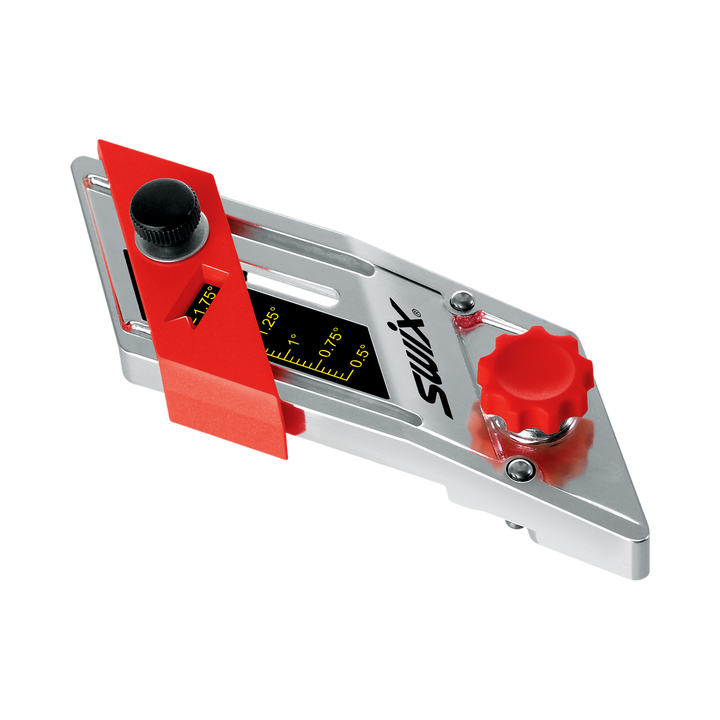 Available to order
Swix
Swix Base File Guide 0.5–2.0°
Adjustable guide for setting or maintaining a specific base bevel.
Only use it when you know what base bevel the ski should have. Do not increase the bevel by guesswork.
-
Side edge
 Available to order
Swix
Swix Side Edge File Guide WC with mount
File guide that steers a file or diamond stone along the ski's side edge.
Keep the ski's known original angle. 88° is a common all-round choice when a new side edge angle is deliberately being set.

Files and diamond stones
-
Diamond stone
 Available to order
Swix
Swix Pro Racing diamond stone
For burrs, light surface rust, polishing, and regular maintenance with minimal material removal.
Medium 400 is a practical all-round choice if you are only going to have one diamond stone.
-
Ski file
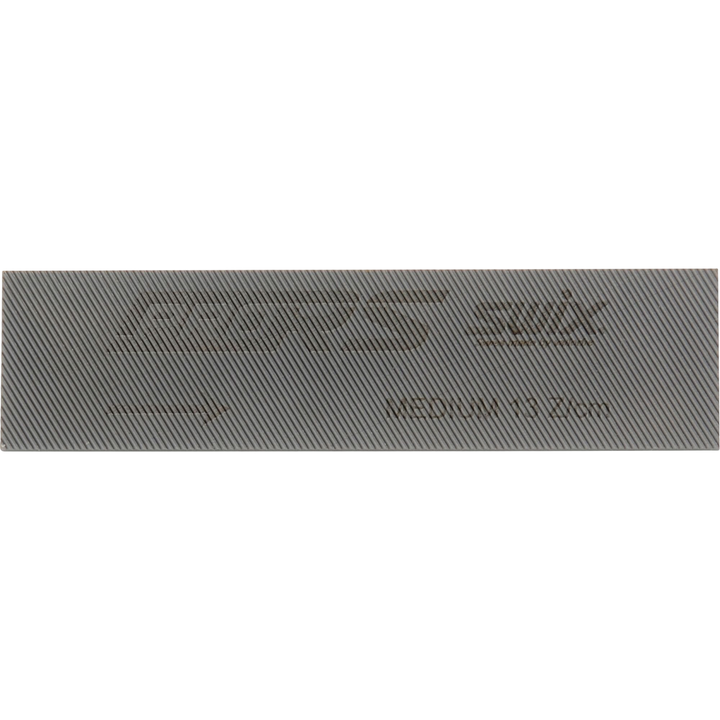 Available to order
Swix
Ski file 10 cm 13 Tpcm - 2nd Cut Medium
For setting an angle or restoring a noticeably rounded, dull, or damaged steel edge.
Use sparingly in the correct guide and always finish with a diamond stone.

Securing skis and sidewalls
-
Sidewall
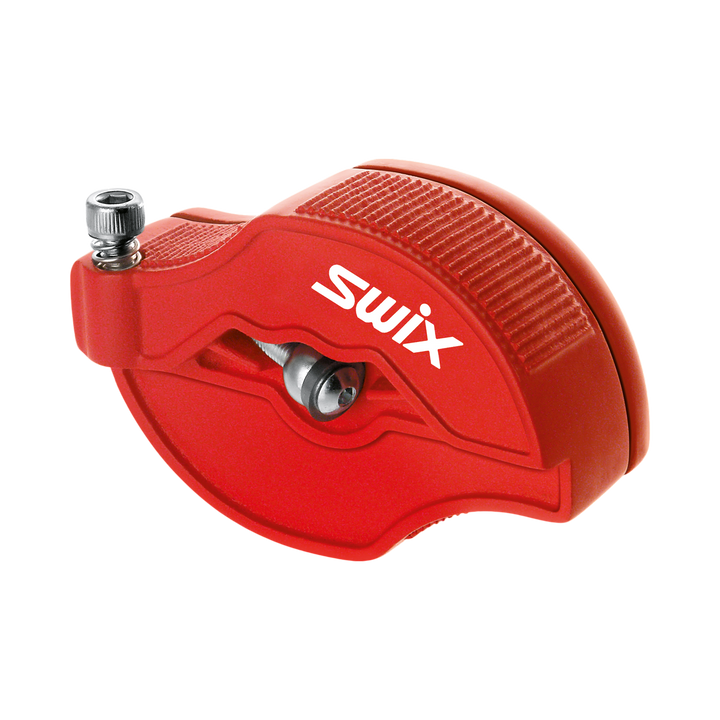 Available to order
Swix
Swix Sidewall Cutter Sport
Exposes the side surface of the steel edge when the plastic above the edge blocks the file or stone.
Set the tool shallow and remove only the thin amount of material that is actually in the way.
-
Ski vise
 Available to order
Swix
Swix World Cup Ski Vise
Keeps the ski stable both with the base facing up and standing on its side.
A ski that does not move makes it easier to hold the same angle along the entire steel edge.
-
Brake retainer band
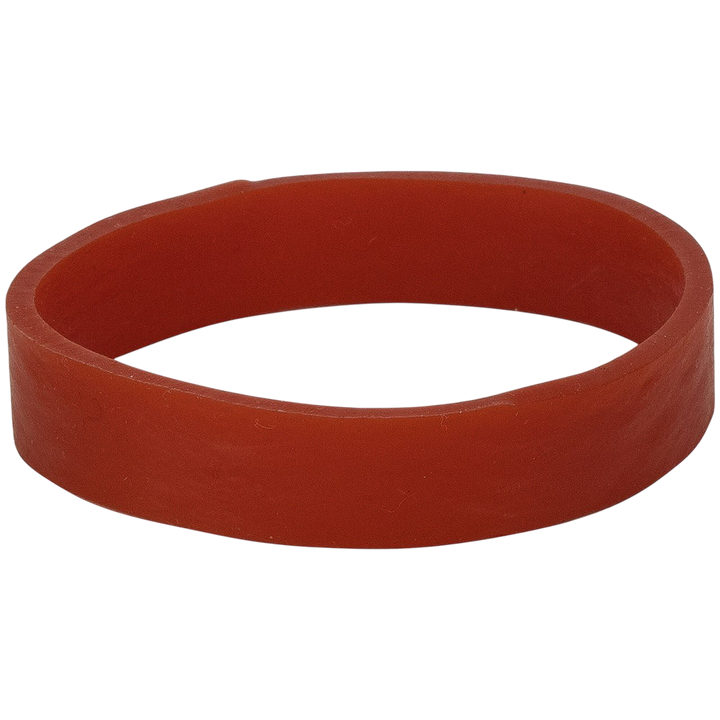 Available to order
Swix
Rubber bands for ski brakes - 10 pack
Keeps the ski brakes out of the way so the entire edge can be worked on.
Check that the band is securely in place before each step of the job, and remove it after finishing.

Continue in Vallaboden
Related alpine ski guides
Choose the simpler family guide for routine maintenance, or explore waxing, cleaning, equipment and storage.
Simple guide
Sharpen the family's alpine skis
A shorter process using an 88° file guide, a medium file and a diamond stone.
Read the guide EquipmentWaxing equipment for alpine skis
Set up a stable workstation with ski vises, a waxing iron, brushes and edge tools.
Read the guide FamilyWax the family's alpine skis
A simple glide waxing routine that protects the base and improves glide.
Read the guide CleaningCleaning alpine skis
Choose the right method for removing dirt and wax residue before preparing the base and steel edges.
Read the guide StorageStoring alpine skis for summer
Protect the base and steel edges from drying out, moisture and rust.
Read the guide Base damageBurned bases on alpine skis
Understand ice burn, damage near the steel edge and when the ski needs professional servicing.
Read the guideFrequently asked questions
Questions about sharpening ski edges
Answers to common questions about angles, tools and steel edge maintenance.
Clamp the ski securely, hold the brake out of the way, and first check the angle, burrs, and any damage. Use an angle-guided tool and start with a diamond stone. Only bring out the file when the edge is rounded, clearly damaged, or when the angle needs to be restored. Finish with a finer stone and remove the hanging burr very lightly from the base side.
First and foremost, keep the ski's known factory angle. For regular piste and all-mountain skiing, 89° or 88° on the side edge is often used. More aggressive race tuning often uses 88° or 87°. The base bevel is often between 0.5° and 1.0° depending on ski type and use.
Yes, when describing the side edge. 88° is the finished angle relative to the plane of the base, while 2° describes the deviation from a right angle of 90°. Always check how your particular edge tool is marked.
Dry the edges after every ski day. Maintain them with a diamond stone when you feel burrs, see light surface rust, or notice poorer grip on hard snow. Use a file less often and only when the stone no longer restores an even edge.
The diamond stone is used most often for maintenance, burrs, and polishing. The file is used when a new angle needs to be set, an old angle needs to be restored, or clear material removal is required. Every file stroke removes more of the steel edge's limited material.
No. The base edge is normally filed when the bevel is created, after a major base repair, or after a full stone grind. During the season it is generally left alone, and minor burrs are removed only with a very fine stone and light pressure.
The basic principle is the same: the correct guide for base edge and side edge, a diamond stone for maintenance, and a file for heavier material removal. The snowboard's length and shape, however, require a stable work area and tools that fit the board's geometry.
At minimum, a stable file guide or a multi-tool, a diamond stone, and if needed a ski file. A ski vise and brake retainer band make the job significantly safer. For base bevel work, a separate base edge guide is needed, and when the sidewall gets in the way, a sidewall tool is required.
Follow the stone's instructions. Many diamond stones work best lightly moistened with water or a special grinding fluid because the liquid carries away metal particles. Dry the stone and steel edge carefully after the work is done.
Take your skis to a workshop for deep rock damage, a cracked or deformed steel edge, heavy rust, an uneven base, unknown geometry, or when you want to reduce a base bevel that is already too large. A workshop is also the right choice when the file guide does not make even contact despite the sidewall being cleared.
Sharpen less, maintain smarter
A sharp edge should be even - not unnecessarily filed down
Dry the edges after skiing, remove small burrs with a diamond stone, and only use the file when the steel truly needs to be restored. That gives you better grip while making the steel edges last longer.